
Affiliate disclosure: some links on this page go to Amazon. If you buy through one we may earn a small commission, at no extra cost to you. Full disclosure.
Offer fresh nyjer in a small-port feeder or mesh sock, or sunflower chips, and keep it clean. The single most common reason a goldfinch feeder stops working is stale nyjer — it goes off faster than any other seed, and finches refuse it outright. Buy small bags more often rather than one large sack.
Two things about American Goldfinches surprise people. They do not leave in winter, and they nest later than any other songbird in North America. Both are worth understanding, because both explain things that look like problems and are not.
Goldfinch basics
- Range: most of the United States, year-round across much of it
- Food: nyjer, sunflower chips, black oil sunflower
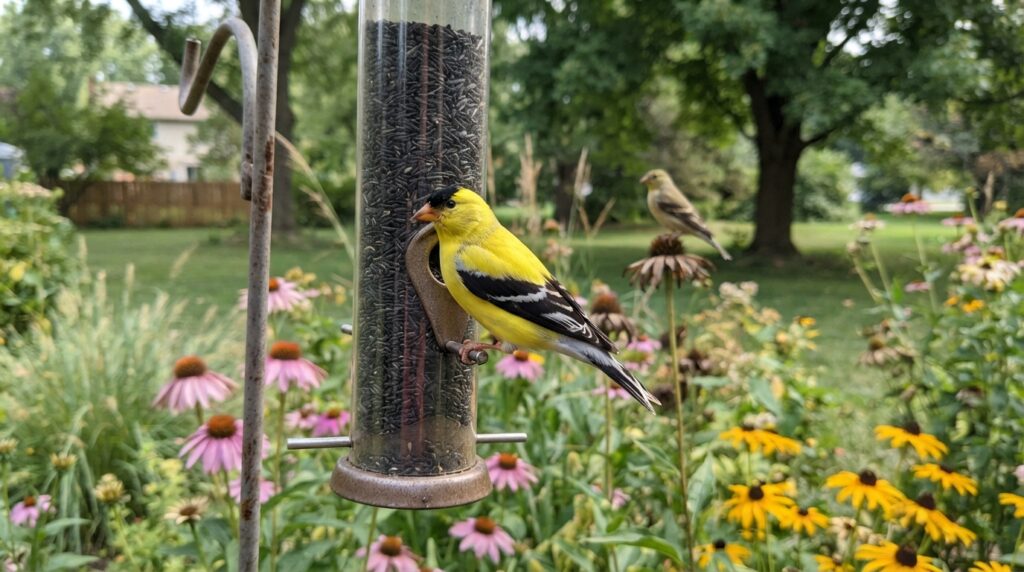
- Feeder: small-port tube or mesh sock; they feed comfortably upside down
- Winter plumage is drab olive — people think they have gone
- Latest nester in North America, timed to thistle down
- Strictly vegetarian — almost uniquely among songbirds
Why they look like a different bird in winter
Most songbirds molt once a year. American Goldfinches molt twice, completely, and the difference between the two plumages is dramatic.
The summer male is brilliant lemon-yellow with a black cap and black wings. By November the same bird is drab olive-brown with a paler belly and no cap at all. Females change less but still dull down considerably.
Every autumn, people report that their goldfinches have migrated. Usually the same birds are still on the feeder, unrecognized. The reliable clue in either season is the black wings with white wing bars — those stay put whatever the body color is doing.
What to feed them
| Food | Notes |
|---|---|
| Nyjer | The classic. Needs very small ports or a mesh sock. Goes stale fast |
| Sunflower chips | Hulled sunflower. Taken enthusiastically, no shell mess, but spoils faster when wet |
| Black oil sunflower | Readily taken from tube feeders |
| Safflower | Largely ignored — worth knowing if you switched for squirrel reasons |
| Suet, peanuts, mealworms | Not eaten. They are vegetarians |
Nyjer is not thistle. It is often sold as “thistle seed”, which is misleading. Nyjer is the seed of an African plant, Guizotia abyssinica, and it is heat-sterilized on import so it cannot germinate — it will not seed your lawn.
It is also the most perishable seed you can buy. Old nyjer dries out, loses its oil and is refused. If your finch feeder has gone quiet, empty it, feel the seed — fresh nyjer is slightly oily, stale nyjer is dry and dusty — and refill from a new bag.
Mesh socks are cheap and let birds cling anywhere on the surface, which suits a flock. Tube feeders last longer and clean properly. The drawback with socks is real though: they hold moisture, cannot be disinfected, and need replacing every season or two rather than cleaning — which puts them at odds with the general advice to avoid feeders you cannot wash thoroughly.
The latest nester in North America
Most songbirds are nesting in April and May. American Goldfinches often do not begin until late June, and frequently July.
The timing is tied to thistle and other composite plants. Goldfinches feed their young almost entirely on regurgitated seed rather than insects, and they use thistle down to line the nest — so both the food supply and the building material peak in midsummer, and the birds have evolved to match.
The practical upshot: if goldfinches vanish from your feeder in early summer and reappear in August with hungry juveniles in tow, that is the breeding cycle rather than anything you did.
Strictly vegetarian
Almost every North American songbird feeds insects to its nestlings, because growing birds need protein. Goldfinches are among the very few exceptions, raising young on seed.
This has an unusual consequence. Brown-headed Cowbirds sometimes lay eggs in goldfinch nests, but cowbird chicks generally do not survive on an all-seed diet. The goldfinch’s diet is, incidentally, a defense against brood parasitism.
Setting up for them
- Multiple ports or a sock. Goldfinches feed in flocks and tolerate each other well — more feeding positions means more birds
- They feed upside down comfortably, which some finch feeders exploit with ports below the perches to exclude House Sparrows
- Leave seed heads standing. Coneflower, black-eyed Susan, sunflowers, thistle, teasel and cosmos left through fall and winter feed goldfinches directly
- Water. A shallow bath is used readily
- Small amounts, often. Given how fast nyjer stales, a part-filled feeder refreshed weekly beats a full one left for a month
A disease note
American Goldfinches are among the species most affected in salmonellosis outbreaks, particularly in Pine Siskin irruption years when large numbers of finches concentrate at feeders. They are also susceptible to House Finch eye disease.
If you see a goldfinch that is lethargic, fluffed up in mild weather, easy to approach, or has swollen or crusted eyes, take feeders and baths down for one to two weeks and disinfect everything. What to look for and who to tell.
Common questions
Where do goldfinches go in winter?
Mostly nowhere. They molt into drab olive-brown plumage and are simply not recognized. Look for the black wings with white wing bars, which stay the same year-round.
Why have goldfinches stopped using my nyjer feeder?
Nine times out of ten the seed is stale. Fresh nyjer is slightly oily; stale nyjer is dry and dusty and gets refused. Empty the feeder, clean it and refill from a new bag.
Is nyjer the same as thistle?
No. Nyjer comes from an African plant and is heat-sterilized on import, so it cannot germinate in your yard despite often being labeled “thistle seed”.
When do goldfinches nest?
Late June into July, later than any other North American songbird. The timing matches the availability of thistle down for the nest and seed for the young.
Will goldfinches eat suet or mealworms?
No. They are essentially strict vegetarians, unusual among songbirds, and even raise their young on seed rather than insects.
Should I use a sock feeder or a tube?
Socks are cheap and let a whole flock cling at once. Tubes last longer and can actually be cleaned and disinfected, which matters given how susceptible finches are to feeder-borne disease. If you use socks, replace them rather than trying to wash them.
Related guides
- Best bird seed, including nyjer
- Types of bird feeders
- Sick birds at your feeder
- Common backyard birds of North America
Sources: Cornell Lab of Ornithology, All About Birds American Goldfinch account and Birds of the World; Project FeederWatch, Feeding Birds and Sick Birds and Bird Diseases; National Audubon Society; US Fish & Wildlife Service seed preference research.
Feeding goldfinches?
Nyjer needs a feeder with small ports or a mesh sock. Nyjer also goes stale quickly, so buy smaller bags more often rather than one large sack.
This link goes to Amazon. If you buy through it we may earn a small commission, at no extra cost to you.