
Affiliate disclosure: some links on this page go to Amazon. If you buy through one we may earn a small commission, at no extra cost to you. Full disclosure.
Rodents are eating what falls, not what is in the feeder. Fit a seed catcher tray, switch to hulled sunflower chips or safflower, rake the ground daily, and store seed in a sealed metal container. Do not use rodent poison anywhere near a feeder — it moves up the food chain into the hawks and owls that would otherwise be helping you.
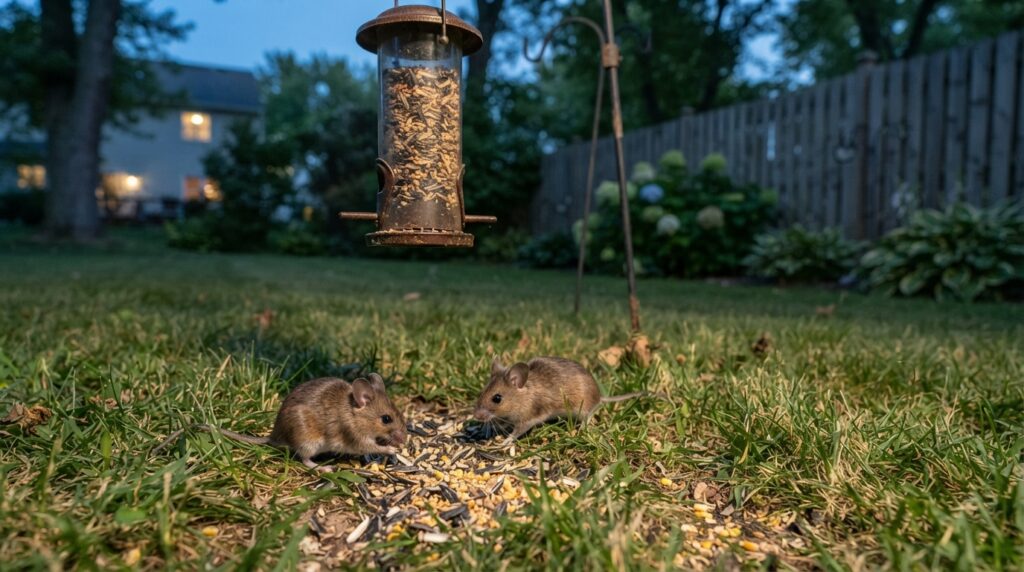
Bird feeders do not attract rodents. Spilled seed on the ground attracts rodents, and a feeder is simply the machine that puts it there.
That distinction matters, because it means you can keep feeding birds. Almost everything on this page is about the ground rather than the feeder.
In order of effect
- A seed catcher tray under the feeder — the single biggest change
- Hulled sunflower chips or safflower instead of whole mixed seed
- Raking the ground daily while there is a problem
- Sealed metal seed storage, not the sack it came in
- Filling small, and taking feeders in overnight if it persists
- Never poison. It kills the predators that hunt rodents for you
Why it is the ground, not the feeder
Birds are messy eaters by design. A chickadee takes one seed and flies off; a House Sparrow sorts through a mix and sweeps the parts it does not want onto the lawn; sunflower hulls drop constantly. Under a busy feeder that adds up to a steady, reliable, effortless food supply at ground level.
Cheap mixes make this dramatically worse. A bag padded with milo, red millet and wheat gets sorted through and largely discarded, which means most of what you bought ends up as rodent food. How to read a seed label.
Stop the spillage
Seed catcher trays
A wide shallow tray fitted below the feeder that catches dropped seed and hulls. Birds also feed from it, which means less reaches the ground at all.
Drawbacks: it becomes another surface needing cleaning, and it must have drainage or it turns into a bowl of wet seed — which is its own problem. Empty and scrub it as often as you clean the feeder.
Check the stated diameter against your feeder — a tray narrower than the feeder catches very little, which is the usual disappointment. A mesh or screened base rather than a solid one is the specification that matters.
Change what you offer
| Switch to | Why |
|---|---|
| Sunflower chips | No hulls, so almost nothing to drop. Costs more and spoils faster when wet |
| Safflower | Cardinals and finches take it; squirrels and grackles largely do not, so far less gets swept aside |
| Nyjer | Tiny, and finches waste little of it |
| Suet in a cage | Nothing falls |
| Stop: cracked corn | The single strongest rodent attractant on a typical feeding station |
| Stop: cheap mixes and ground feeding | Both put food directly where rodents want it |
Clear up
- Rake underneath daily while there is a problem, weekly after
- Fill the feeder with a few days’ worth, not to the brim
- Take feeders in overnight if it persists — rodents are largely nocturnal, birds are not, so you lose nothing
- Move the feeder onto a hard surface where spillage is visible and easy to sweep
Storage
Often the real source. A sack of seed in a shed or garage is an open invitation, and mice chew through plastic bins without difficulty.
Use a sealed metal container with a tight lid, raised off a concrete floor. Buy quantities you will use within a month or two. More on seed storage here.
Make the yard less hospitable
Rodents need cover as much as food, and a yard offering both is a yard they settle in.
- Keep grass short around the feeding area
- Clear brush piles, log stacks and dense ground cover near the feeder
- Move the feeder away from sheds, decks, woodpiles and fence lines, which are travel routes
- Secure trash, pick up fallen fruit, feed pets indoors
- Seal gaps into sheds and crawl spaces — a mouse needs very little
- Feeders on a smooth pole with a baffle are harder to climb than a hanging feeder near a fence
Why not poison
Do not use rodenticide near a bird feeding station. This is the most important thing on the page.
Anticoagulant rodenticides do not kill quickly. A poisoned rodent stays alive for days, becomes slow and easy to catch, and is then eaten by exactly the animals that hunt rodents — hawks, owls, foxes, and domestic cats and dogs. Secondary poisoning of raptors is well documented, and several states have restricted the strongest compounds because of it.
Barred Owls, Great Horned Owls and Red-tailed Hawks all hunt suburban yards. Poisoning the rodents removes the predators that would otherwise be controlling them for free, which tends to make the problem worse over time rather than better.
Snap traps in tamper-resistant boxes, placed where birds and pets cannot reach, are the humane and non-transferring alternative. Glue traps are inhumane and regularly catch birds, snakes and lizards.
When to stop feeding for a while
If rodents are getting into a building, or numbers are climbing despite the changes above, take the feeders down entirely for two to four weeks and keep the ground clear.
Removing the food source is what actually ends it. The birds will be fine — feeder food is a supplement rather than a lifeline, and they will spread out and return when you start again.
When you do restart, restart with the changes in place: catcher tray, hulled seed, small fills, daily sweeping.
Common questions
Do bird feeders attract rats?
Spilled seed does. The feeder itself is rarely the target. Contain the spillage and the attraction largely disappears.
What is the fastest fix?
A seed catcher tray plus a switch to hulled sunflower chips, with the ground raked daily. That combination removes most of the food supply within a few days.
Can I use rat poison if I keep it away from the feeder?
Better not to. The poisoned rodent is the hazard, not the bait station — it stays alive for days and is then eaten by hawks, owls, foxes or pets. Snap traps in tamper-resistant boxes avoid that entirely.
Will taking the feeder down at night help?
Yes. Rodents are largely nocturnal and birds are not, so you lose nothing by bringing feeders in at dusk. Clearing the ground at the same time is what makes it work.
Which seed attracts rodents most?
Cracked corn, followed by cheap mixes containing milo, wheat and red millet — birds discard those, so most of the bag ends up on the ground.
Should I stop feeding birds altogether?
Not permanently. A two to four week pause with the ground kept clear usually resolves it, and restarting with a catcher tray and hulled seed keeps it resolved.
Related guides
- Best bird seed
- Wet bird seed: can you still use it?
- How to stop squirrels
- Raccoons at your bird feeders
Sources: Cornell Lab of Ornithology, All About Birds and Project FeederWatch on feeder pests, spillage and placement; US Fish & Wildlife Service and state wildlife agency guidance on secondary rodenticide poisoning of raptors; California Department of Pesticide Regulation and other state restrictions on anticoagulant rodenticides; university extension service guidance on rodent management.
Starting out?
One tube feeder with black oil sunflower brings in more species than any other single setup. Metal ports last; all-plastic ports get chewed open within a season or two.
This link goes to Amazon. If you buy through it we may earn a small commission, at no extra cost to you.