
Affiliate disclosure: some links on this page go to Amazon. If you buy through one we may earn a small commission, at no extra cost to you. Full disclosure.
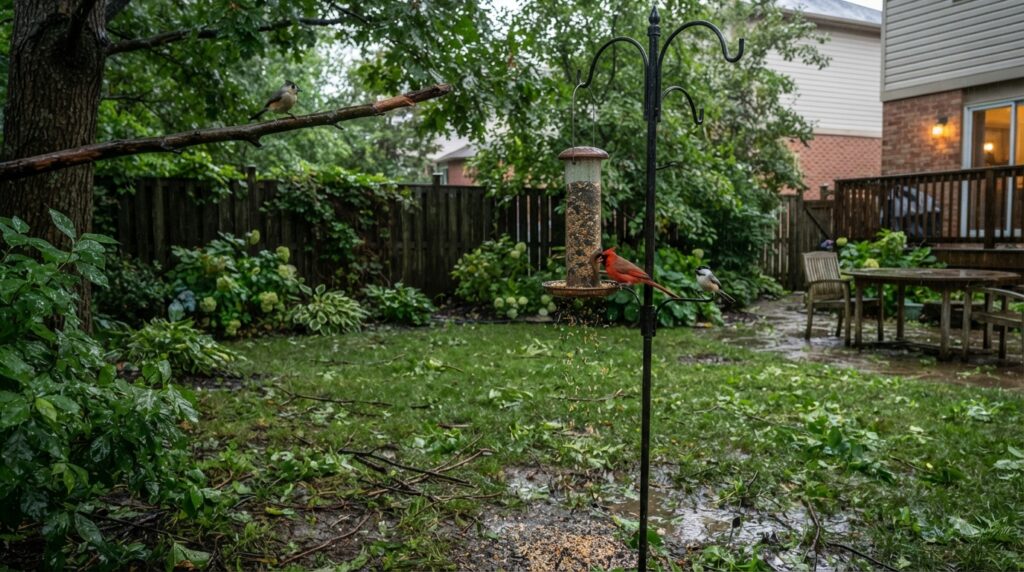
Leave feeders out and full for as long as it is safe — birds feed heavily in the falling pressure before a storm and that food is genuinely useful. Then bring everything indoors before the wind arrives, because a feeder and a metal pole become projectiles. Put them back out as soon as it is safe afterward, when natural food has been stripped and birds need it most.
Two windows matter and they pull in opposite directions. Before a storm, birds are loading up, and your feeder is valuable. During a storm, your feeder is a hazard to your own windows and your neighbor’s. Getting the timing right is most of this article.
The sequence
- Days before: keep feeders full. Birds feed heavily on falling pressure
- Hours before: bring everything in — feeders, poles, baths, hangers
- During: nothing to do. Birds shelter better than we give them credit for
- Immediately after: put feeders back out. This is when they matter most
- Days after: expect unusual species, and report anything odd to eBird
Before: keep them full
Birds detect falling barometric pressure and respond to it, feeding more intensively in the hours before a front or storm arrives. Anyone who has watched a feeder go frantic on a gray afternoon has seen it.
This is a genuinely useful time to have food available. A bird going into a multi-day storm with reserves is in a considerably better position than one that is not, and natural food gets stripped by wind and rain.
So keep feeders stocked right up until you need to secure the yard. Suet and black oil sunflower are the useful things here — high fat, high energy per visit.
Hours before: bring it all in
A hanging feeder in a hurricane or a severe thunderstorm is a projectile, and a shepherd’s hook or metal pole is worse. In the wind speeds that come with a named storm or a severe thunderstorm warning, loose yard objects are a recognized hazard to windows and to people.
Take in: feeders, poles and hooks, bird baths, hummingbird feeders, seed catcher trays, and anything hanging from a bracket. Store them indoors or in a secured garage rather than laid on the ground, where they will simply roll.
Also worth doing while you are out there:
- Move seed storage somewhere dry and off the floor. Flooded seed is ruined seed, and a wet sack molds within days
- Secure trash cans, which otherwise scatter food and draw animals afterward
- Leave nest boxes up. They are securely mounted and may be sheltering birds. Taking them down mid-season is worse than leaving them
- Do not try to move or shelter wild birds. They handle this better than any improvised arrangement you can make
During: what birds actually do
Small birds shelter on the lee side of dense vegetation, inside cavities, under eaves and in thick evergreens, gripping tight and sitting it out. Cavity nesters and species that use roost boxes have a real advantage here, which is one of the quieter arguments for putting nest boxes up.
Seabirds and some migrants can be displaced long distances by hurricanes, which is where the post-storm birding phenomenon comes from. Songbirds in a yard mostly stay put.
There is nothing useful for you to do during the storm itself, and the standard advice applies: stay inside.
After: this is when it matters
The days following a major storm are harder for birds than the storm was. Fruit and seed heads are stripped, insects are drowned or dispersed, flowers that fed hummingbirds are shredded, and standing water is fouled.
Put feeders back out as soon as it is safe to be outdoors.
In the first days after
- Refill feeders promptly — natural food has been stripped
- Clean and disinfect first. Anything left out is soaked, and wet seed molds fast
- Bin any seed that got wet. Moldy seed causes aspergillosis. How to tell
- Put out clean water. After flooding, standing water is often contaminated
- Put hummingbird feeders back up quickly — flowers take weeks to recover and nectar feeders bridge the gap
- Watch for downed nests. What to do if you find young birds
- Keep cats indoors for several days. Disoriented and exhausted birds are easily caught
If you live somewhere with a storm season, sealed metal seed storage raised off the floor is the practical buy — it survives humidity, keeps rodents out when garages get disturbed, and means you still have usable seed the day after. Honest drawbacks: metal containers are heavy and awkward to move, they rust from the inside if seed goes in damp, and cheaper lids do not seal tightly enough for a humid coastal climate.
The birding side
Hurricanes displace seabirds inland, sometimes hundreds of miles, and birders watch for it. Species that belong well offshore turn up on reservoirs, lakes and rivers in the days after a landfalling storm.
If something unfamiliar appears in your yard or on your local water after a storm, it is worth recording in eBird. Storm-displaced birds are genuinely useful data, and post-hurricane records are one of the ways movements of pelagic species get documented at all.
A note on tree damage
The instinct after a storm is to clear everything up. Some restraint helps birds.
Standing dead trees and broken limbs become cavity nest sites, and the insects that colonize dead wood are food. Where a damaged tree is not a hazard to anyone, leaving it standing is a net gain for the yard. Brush piles from cleared limbs make excellent shelter, particularly in the weeks after a storm when cover is scarce.
Obviously this is a judgment about safety first. Anything that could fall on a person, a building, or a power line comes down.
Common questions
Should I take bird feeders down before a hurricane?
Yes, in the hours before the wind arrives. Feeders, poles and baths become projectiles. Keep them full until then, though, because birds feed heavily ahead of a storm.
Why do birds swarm the feeder before a storm?
They respond to falling barometric pressure by feeding intensively, building reserves before conditions make foraging difficult. It is one of the more reliable weather signs in a backyard.
Where do birds go during a hurricane?
Small birds shelter in dense vegetation, cavities and under eaves, and grip on. Seabirds can be carried long distances inland. Songbirds in a yard generally stay put.
Can I use seed that got rained on?
Only if it is merely damp, still loose and smells of nothing — dry it fully in a thin layer first. Clumped, musty or bloomed seed causes aspergillosis and should be binned.
How soon should I put feeders back out?
As soon as it is safe to be outside. The days after a storm are when natural food is most depleted, so this is when a feeder does the most good.
Should I take nest boxes down before a storm?
No. They are securely mounted and may be sheltering birds. Removing one mid-season does more harm than leaving it.
Related guides
- Feeding birds in extreme heat
- Wet bird seed: can you still use it?
- I found a baby bird on the ground
- Nest box hole sizes by species
Sources: Cornell Lab of Ornithology, All About Birds, on bird behavior in severe weather and post-storm displacement; eBird; National Audubon Society; National Weather Service and NOAA guidance on securing outdoor objects ahead of severe weather; USGS National Wildlife Health Center on aspergillosis.
Starting out?
One tube feeder with black oil sunflower brings in more species than any other single setup. Metal ports last; all-plastic ports get chewed open within a season or two.
This link goes to Amazon. If you buy through it we may earn a small commission, at no extra cost to you.