
Affiliate disclosure: some links on this page go to Amazon. If you buy through one we may earn a small commission, at no extra cost to you. Full disclosure.
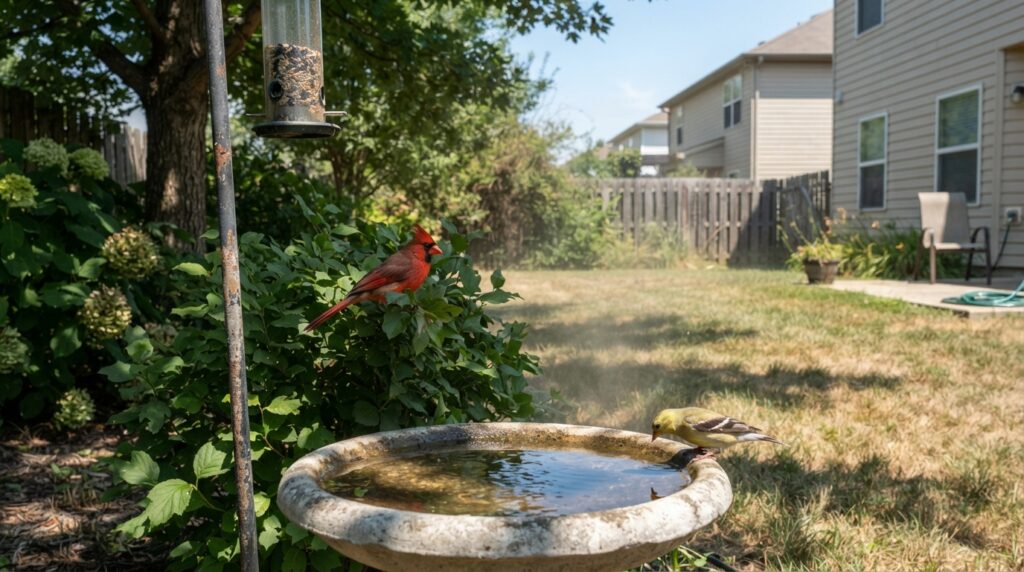
Water matters far more than food in a heat wave. Put out a shallow bath in shade, refill it daily, and add a second one if you can. Change hummingbird nectar every two days above 90°F, take plain suet down entirely, and fill seed feeders with only a couple of days’ worth so nothing sits and spoils.
Most bird-feeding advice is written around winter, when the case for helping is obvious. Extreme heat is the other end of the year and it gets far less attention, even though a stretch of 100°F days across Texas, the Southwest or the Central Valley is harder on birds than a cold snap in most of the country.
Birds cannot sweat. They shed heat by panting, by fluttering the throat, by holding their wings away from the body, and by losing water — which is why the heat problem is really a water problem.
What changes above 90°F
- Water becomes the priority, ahead of food
- Hummingbird nectar: every 2 days, sooner if it clouds
- Plain suet comes down — it turns rancid and fouls feathers
- Fill seed feeders small, a couple of days at a time
- Clean more often than the usual two weeks
- Feeders and baths into shade wherever possible
Water first
A bird bath in a heat wave will do more than any feeder. Birds need water for drinking and for bathing, and in drought conditions natural sources dry up exactly when demand peaks.
- Shallow. Under two inches at the edge, no more than three in the middle. A deep basin is a drinking station only
- In shade. Water in full sun gets unpleasantly warm and evaporates fast
- Refill daily, and scrub more often than usual. Warm water grows algae and bacteria quickly
- Add a second at a different height. Ground level serves different species than a pedestal
- Moving water — a dripper, mister or small fountain — attracts far more birds than still water and slows algae
A mister is the single best hot-weather addition. Hummingbirds in particular rarely use a conventional bath — too deep, too still — but will fly repeatedly through a fine spray. Aimed through foliage so birds can perch in the wet leaves, it gets used constantly in hot weather.
Check the fitting matches your outdoor tap or hose thread before ordering — mismatched threads are the usual annoyance. Honest drawbacks: misters use water continuously unless you put them on a timer, which is a real consideration in a region under drought restrictions, and the fine nozzles clog with mineral deposits in hard water and need periodic soaking.
Nectar in the heat
Sugar water ferments and grows mold faster than most people expect, and heat accelerates it sharply.
| Temperature | Change nectar |
|---|---|
| Above 90°F | Every 2 days |
| 80–90°F | Every 2–3 days |
| 70–80°F | Every 3–4 days |
| Feeder in full sun | Shorten all of the above |
Change it immediately if it is cloudy, has black specks, or has a film inside the reservoir, whatever the schedule says. Make a batch and keep it in the fridge — it keeps about two weeks and makes the two-day changes far less of a chore. Fill the feeder part way rather than to the top, so less gets thrown away. Full recipe and schedule.
Suet comes down
Plain suet softens and turns rancid above roughly 90°F. Melted fat that gets onto feathers destroys their structure and waterproofing, and a bird with fat-fouled plumage around the face and throat is in genuine trouble.
Either take suet down for the hottest part of summer, or switch to a no-melt dough cake, which is formulated with flour and cornmeal to hold shape at higher temperatures. Even no-melt products have limits — check the manufacturer’s stated temperature range rather than assuming.
Seed in the heat
Heat and humidity spoil seed, and spoiled seed causes aspergillosis, a fungal lung infection.
- Fill small. A couple of days’ worth, not to the brim
- Empty the last inch at each cleaning rather than topping up over it — seed below the lowest port in a tube feeder never gets eaten
- Clean weekly rather than every two weeks
- Store seed sealed, cool and dry, not in a hot garage. More on storage
- Move feeders into shade if you can, which slows spoilage considerably
- Rake underneath. Spilled seed on hot damp ground molds within days
Mealworms are worth mentioning here: dried mealworms keep fine, but any live mealworms or fruit you put out will go off within hours in extreme heat and should be offered in tiny quantities or not at all.
Recognizing heat stress
Birds in heat do several things that look alarming and are normal thermoregulation:
- Panting with the bill open
- Gular fluttering — rapid vibration of the throat, which moves air across moist surfaces
- Holding wings away from the body to expose bare skin underneath
- Sitting still in deep shade through the middle of the day
- Feeding mainly at dawn and dusk, which is why your feeder looks abandoned at noon
None of that needs intervention. A bird that is on the ground, unable to fly, unresponsive or collapsed is a different matter — that needs a licensed wildlife rehabilitator, not a bowl of water.
Do not give a distressed wild bird water by dripping it into the mouth. Liquid enters the airway easily and drowning is a common cause of death in home-rescued birds. Put it somewhere dark, quiet and cool in a ventilated box and call a rehabilitator. More on handling a bird in trouble.
Longer-term shade
Yards with mature trees and layered native planting stay measurably cooler than open lawn, and shade is what birds are actually looking for in a heat wave. Native shrubs and small trees also support the insects birds feed on, which matters because drought reduces insect availability at the same time.
Audubon’s free Plants for Birds database is searchable by zip code and is the sensible starting point for a region-appropriate list.
Common questions
Should I stop feeding birds in a heat wave?
No, but change how. Fill feeders with a couple of days’ worth at a time, clean weekly rather than fortnightly, take plain suet down, and prioritize water over food.
How often should I change nectar in hot weather?
Every two days above 90°F, and sooner if it clouds or develops specks. Full sun shortens that further.
Why is a bird sitting with its beak open and wings held out?
Thermoregulation. Birds cannot sweat, so they pant, flutter the throat and hold their wings away from the body to shed heat. It is normal and needs no intervention.
Can I put ice in the bird bath?
You can, and it does little harm, but it melts quickly and the benefit is brief. Shade, a daily refill and a second bath do considerably more.
Where did the birds go at midday?
Into deep shade. Feeding shifts to dawn and dusk in hot weather, which is exactly when you should expect to see them.
Is suet really dangerous in summer?
Plain suet, yes. It turns rancid above about 90°F and melted fat on feathers destroys their structure. Use no-melt dough cakes within their stated temperature range, or take it down.
Related guides
- Wildfire smoke and backyard birds
- Hummingbird nectar recipe
- Wet bird seed: can you still use it?
- How to clean bird feeders
Sources: Cornell Lab of Ornithology, All About Birds, on summer feeding, suet, nectar and water; Project FeederWatch, Feeding Birds; National Audubon Society, including the Plants for Birds database; USGS National Wildlife Health Center on aspergillosis; university extension service guidance on summer bird feeding.
Starting out?
One tube feeder with black oil sunflower brings in more species than any other single setup. Metal ports last; all-plastic ports get chewed open within a season or two.
This link goes to Amazon. If you buy through it we may earn a small commission, at no extra cost to you.