
Affiliate disclosure: some links on this page go to Amazon. If you buy through one we may earn a small commission, at no extra cost to you. Full disclosure.
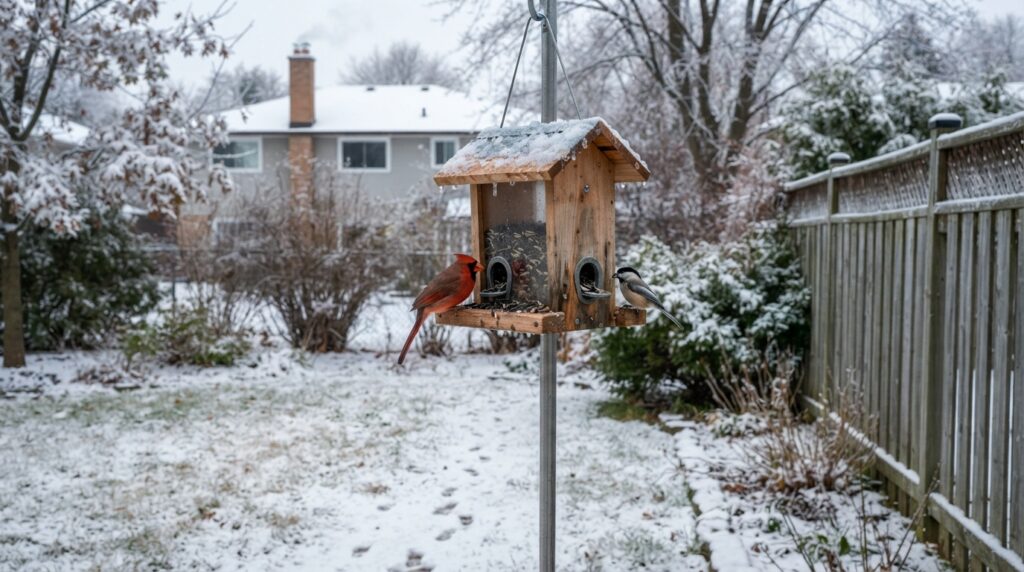
Birds need feeders most in the hours during and after a snowstorm, when natural food is buried. Brush snow off the feeder and ports, keep a covered feeder so seed stays reachable, and clear a patch of ground for juncos and sparrows that cannot dig through snow. Do not pour hot water on a frozen feeder — it cracks cold plastic. Chip ice out gently instead.
A snowstorm is when feeding does the most good and when feeders most often stop working — capped with snow, jammed with ice, or on the ground because a suction cup let go in the cold. A little preparation keeps them running through exactly the weather that makes them matter.
The essentials
- Brush snow off the feeder and clear the ports after a storm
- Covered feeders keep seed reachable in falling snow
- Clear a patch of ground for juncos and sparrows
- Chip ice out gently — never pour hot water on cold plastic
- Fill in the calm before a storm, and again as soon as it eases
- Dry feeders fully after cleaning, or they freeze solid
Before the storm
Birds detect falling barometric pressure and feed heavily ahead of a front. A well-stocked feeder in the hours before snow arrives lets them build reserves for the storm, which is genuinely useful.
- Fill feeders in the calm before it hits
- Offer high-fat foods — black oil sunflower, suet, peanuts — which deliver the most energy per visit
- Top up any heated bird bath and check it is working. Open water is scarce in a freeze
- Make sure feeders are securely mounted. A loaded feeder plus wind plus snow is heavier than a hook rated for a summer feeder
During and after
The critical window is during the storm and the hours after, when everything is buried and birds are burning energy to stay warm.
Storm-day jobs
- Brush snow off the feeder — a capped port is a closed feeder
- Clear snow from the ports and perches so birds can actually feed
- Shovel or sweep a patch of ground under the feeder for ground feeders
- Scatter seed on the cleared patch or a low tray for juncos, sparrows and doves
- Refill — consumption is high and seed disappears fast
- Keep water open if you have a heated bath
Frozen feeders
After a thaw-freeze cycle, or freezing rain, seed and mechanisms lock up with ice.
Do not pour hot water on a frozen feeder. Sudden heat cracks cold plastic and can shatter glass. It is one of the most common ways feeders break in winter.
Instead: bring the feeder indoors to thaw if you have a spare to put out, or chip ice from the ports gently with a blunt tool. For a feeder you cannot bring in, a little lukewarm — not hot — water on a stubborn port, followed by drying, is the most you should risk.
This is a strong argument for owning two of your main feeder, so one can thaw indoors while the other is out. It is also why drying a feeder completely after cleaning matters so much in winter — a damp feeder freezes into a solid block overnight.
Feeding ground birds under snow
Juncos, tree sparrows, doves and towhees feed on the ground and cannot dig through snow. After a heavy fall they are the birds most in trouble, and the easiest to help.
- Shovel or sweep a patch under or near the feeder down to bare ground or a hard layer
- Scatter white proso millet and sunflower on the cleared area
- A low ground tray raised an inch or two keeps seed above the snow and drains after a thaw
- Under a dense evergreen stays clearer of snow naturally and gives cover at the same time
- Refresh it after each snowfall — a cleared patch caps over quickly
Feeders that cope with snow
Some designs handle winter far better than others.
| Feature | Why it helps |
|---|---|
| A wide roof or weather dome | Keeps snow off the ports and seed dry |
| Metal ports | Do not swell and jam the way wet plastic can, and survive squirrels |
| Covered platform | An open tray fills with snow in minutes; a roofed one stays usable |
| Removable base | Lets you clear ice and empty the mushy bottom seed |
| Simple, few moving parts | Weight-activated mechanisms seize with ice and seed dust |
A clear weather dome mounted above a feeder keeps snow off and doubles as a squirrel baffle from above. Check the dome diameter is wide enough to actually shield the ports. Honest drawbacks: domes catch wind and can set a hanging feeder swinging, they need clearing after wet snow that sticks to them, and they are one more thing to take down and clean.
Suet in the cold
Winter is suet’s season, but hard cold changes how it behaves. Suet becomes rock hard below freezing and some smaller birds struggle to feed on a solid block — smaller pieces or a scored cake help. A tail-prop feeder lets woodpeckers brace and work at it properly.
This is the opposite of the summer problem, where suet melts and fouls feathers. In winter you want the fat, and there is no rancidity risk in the cold. The summer version of this question.
Cleaning still matters
Cold does not sterilize anything, and winter feeding concentrates birds. Keep to the every-two-weeks schedule, and weekly if northern finches arrive in numbers, since finch concentrations are when salmonellosis spreads.
Bring the feeder to a utility sink rather than scrubbing it outdoors in the cold, and dry it completely before it goes back out. Full method, and what to watch for.
Common questions
Should I feed birds during a snowstorm?
Yes — it is when feeding does the most good, because natural food is buried and birds are burning energy to stay warm. Keep feeders stocked and the ports clear.
My feeder is frozen shut. What do I do?
Bring it indoors to thaw if you have a spare, or chip the ice from the ports gently. Never pour hot water on it — sudden heat cracks cold plastic and shatters glass.
How do I feed ground birds when there is snow?
Clear a patch down to bare ground under or near the feeder and scatter millet and sunflower on it, or use a low raised tray. Refresh it after each snowfall, since it caps over fast.
Do birds still need feeders if it snows a lot?
They rely on them more, because natural food is inaccessible. Feeder food is still a supplement rather than their whole diet, but a reliable one matters most in exactly these conditions.
Why did my feeder crack in the cold?
Usually hot water poured on frozen plastic, or water left inside after cleaning that expanded as it froze. Chip ice out gently and dry feeders fully before they go back out.
Is suet good in winter?
It is at its best — high fat, no rancidity risk in the cold. It does go rock hard, so smaller pieces or a scored cake help smaller birds, and a tail-prop feeder helps woodpeckers.
Related guides
- Winter bird feeding in the Upper Midwest and Northeast
- Heated bird baths and winter water
- Where do birds sleep in winter?
- How to clean bird feeders
Sources: Cornell Lab of Ornithology, All About Birds and Project FeederWatch, on winter feeding, feeder placement and cleaning; National Audubon Society; Project FeederWatch, Sick Birds and Bird Diseases; university extension service guidance on winter bird feeding.
Starting out?
One tube feeder with black oil sunflower brings in more species than any other single setup. Metal ports last; all-plastic ports get chewed open within a season or two.
This link goes to Amazon. If you buy through it we may earn a small commission, at no extra cost to you.