
Affiliate disclosure: some links on this page go to Amazon. If you buy through one we may earn a small commission, at no extra cost to you. Full disclosure.
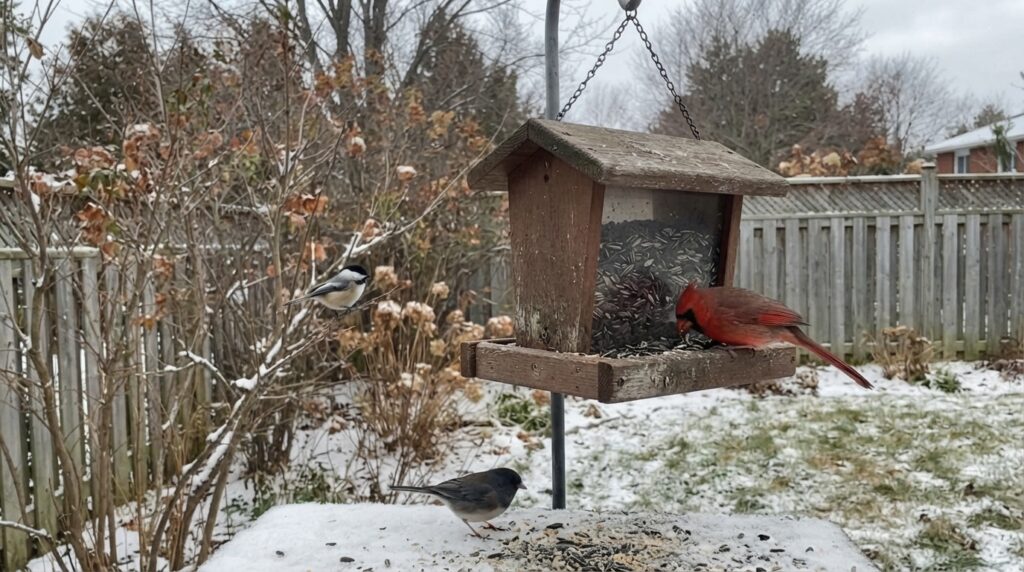
Winter is the best season for feeder photography — bare branches, snow backdrops, hungry birds and low soft light. A Northern Cardinal against snow is the shot everyone wants, and it comes to a hopper or platform baited with black oil sunflower or safflower. Match the feeder to the bird, put it where morning light hits it, and let the birds settle before expecting anything good.
A camera feeder or a window setup gets a lot more interesting once you know which birds you can realistically expect and what brings each one into frame. Winter does most of the work for you: natural food is scarce so feeder traffic is high, the trees are bare so birds are visible, and the low sun gives soft, warm light for much of the day.
This is organized by bird, with what pulls each one in.
Why winter is the season for this
- High feeder traffic — natural food is buried
- Bare branches and snow make clean backdrops
- Low, soft light for much of the short day
- Brilliant plumage — cardinals, jays and goldfinches against white
- Birds stay longer in cold weather, feeding heavily
The showpiece birds
Northern Cardinal
The shot everyone wants: a brilliant red male against snow. Cardinals do not use tube feeders comfortably — they want somewhere to stand — so a hopper or platform is what brings them into camera range. Black oil sunflower or safflower, and they favor feeding at dawn and dusk, which happens to be when the light is best. Full cardinal guide.
Blue Jay
Large, boldly patterned, and dramatic in flight. Whole peanuts on a platform bring them reliably. They arrive in small groups and are unmissable when they do. Blue Jay guide.
American Goldfinch
In winter they are drab olive rather than yellow, but a flock on a nyjer feeder or clinging to seed heads still photographs beautifully, and the black-and-white wings give definition. Goldfinch guide.
Red-bellied and Downy Woodpeckers
Woodpeckers are camera favorites because they hold still while feeding and brace in profile. Suet is the draw — a feeder with a tail prop lets them settle where the camera can see them. Downies are small and confiding; Red-bellies are larger with a bright red cap.
Matching feeder to bird
| Bird | Feeder | Food |
|---|---|---|
| Northern Cardinal | Hopper, platform | Black oil sunflower, safflower |
| Blue Jay | Platform | Whole peanuts, striped sunflower |
| Chickadees, titmice | Tube, window | Black oil sunflower, sunflower chips |
| Goldfinches | Nyjer feeder, sock | Nyjer, sunflower chips |
| Woodpeckers | Suet cage with tail prop | Suet, peanuts |
| Nuthatches | Tube, suet, window | Sunflower, suet, peanuts |
| Juncos, sparrows | Ground, low tray | White proso millet, sunflower |
| House Finches | Tube, window | Sunflower, nyjer |
The lesson from that table: no single feeder catches everything. If you want variety on camera, run two or three types. A tube, a platform and a suet cage between them cover almost every winter feeder bird. Feeder types compared.
The irruption bonus
Some winters bring northern finches south in numbers — Pine Siskins, Common Redpolls, Evening Grosbeaks, Pine Grosbeaks. These are irregular and unpredictable, arriving only when the boreal seed crop fails, and an irruption year is a genuine event for a feeder photographer.
Evening Grosbeaks in particular are spectacular and were once common feeder birds across much of the north; they have declined substantially, so a flock at a feeder is now a notable sight. The Winter Finch Forecast each fall predicts which species are likely to move. More on irruption years.
An irruption year also raises the disease risk, because finch concentrations are associated with salmonellosis. If siskins arrive in numbers, clean feeders weekly and take everything down at the first sign of a sick bird. Good photography does not come before the birds’ welfare. What to watch for.
Setting up for good shots
You are arranging a set, not just hanging a feeder.
- Position for morning light. An east or southeast aspect gives warm, low, front light for the first hours — the best of the short winter day
- Mind the background. A cluttered fence or a bright window behind the feeder ruins a shot. Aim for evergreen foliage, snow, or clean distance
- Add a natural perch. A bare branch clamped near the feeder gives birds a place to pause — and a photo of a bird on a branch beats one of a bird on a plastic port every time
- Keep the feeder just out of frame if you can, so birds land on the perch on the way in
- Water pulls in extra species, and a bird bathing or drinking makes a better picture than one eating. A heated bath in winter is a strong addition. Detail here
A hopper feeder is the workhorse for photography because it brings in the showpiece birds — cardinals, jays, grosbeaks — that a tube excludes. Honest drawbacks: hoppers hold more seed than a small yard eats before it spoils, so fill part way; the tray collects droppings from birds standing on it and needs cleaning more often than a tube; and an open hopper is more exposed to squirrels than a caged feeder.
A word on the automatic identification
If you are running a camera feeder, treat its species labels as a starting point rather than a record. It does well on cardinals and jays and much less well on female finches, sparrows, juveniles and anything in poor light — and it occasionally names species that do not occur within a thousand miles. If you are contributing to the Christmas Bird Count, Project FeederWatch or eBird, confirm the bird yourself. Merlin Bird ID from the Cornell Lab is free and more trustworthy. More on camera feeders.
Common questions
What is the best bird to photograph at a winter feeder?
A Northern Cardinal against snow is the classic. Offer black oil sunflower or safflower on a hopper or platform, and shoot at dawn or dusk when cardinals feed and the light is warmest.
Which feeder attracts the most photogenic birds?
No single one. Run a hopper or platform for cardinals and jays, a tube for chickadees and finches, and a suet cage for woodpeckers. Between them they cover almost every winter feeder bird.
How do I get birds to land on a nice perch instead of the feeder?
Clamp a bare branch near the feeder, ideally on the approach side, and keep the feeder just out of frame. Birds pause on the perch on the way in, which makes the better picture.
What is an irruption year and why does it matter for photos?
A winter when northern finches move south because the boreal seed crop failed. It can bring redpolls, siskins and Evening Grosbeaks to feeders that never see them. The Winter Finch Forecast predicts it each fall.
When is the best light for feeder photography?
The first few hours after sunrise, with the feeder positioned to catch low front light from the east or southeast. Winter’s low sun stays soft and warm for much of the short day.
Can I trust the bird names my camera feeder gives me?
As a starting point. It is reliable on distinctive birds and weak on female finches, sparrows and juveniles. Verify before submitting anything to a bird count, using Merlin if unsure.
Related guides
- Bird feeder cameras: what to look for
- Best window bird feeders
- Winter bird feeding in the Upper Midwest and Northeast
- Types of bird feeders
Sources: Cornell Lab of Ornithology, All About Birds and Project FeederWatch species accounts and feeder preference data; the annual Winter Finch Forecast; Project FeederWatch, Sick Birds and Bird Diseases, on salmonellosis in irruption years; North American Breeding Bird Survey population trends for Evening Grosbeak; National Audubon Society.
Starting out?
One tube feeder with black oil sunflower brings in more species than any other single setup. Metal ports last; all-plastic ports get chewed open within a season or two.
This link goes to Amazon. If you buy through it we may earn a small commission, at no extra cost to you.