
Affiliate disclosure: some links on this page go to Amazon. If you buy through one we may earn a small commission, at no extra cost to you. It does not change what we recommend. Full disclosure.
The three things experienced backyard birders actually use are good binoculars with close focus, a heated bird bath, and a pole-and-baffle setup. The things most often given and least often used are decorative birdhouses with the wrong hole size, ornamental bird baths that are too deep, and novelty feeders. If in doubt, seed and a gift card beat a gadget.
Bird-related gifts have an unusually high failure rate, because the attractive version of most of these items is the wrong one. A birdhouse with a perch and a heart-shaped hole is a decoration; a bird bath deep enough to look elegant is unusable by small birds.
This is organized by what the person already has, since that is the actual question.
Before you buy
- They probably have a feeder. A second one is only useful if it is a different type
- Consumables always land — seed, suet, nyjer get used and replaced
- Check the specification, not the styling. Hole size, basin depth, close focus
- Memberships and courses are underrated and cost nothing to store
- Avoid anything that cannot be cleaned — it will not get used twice
For someone who has nothing yet
A starter setup is a genuinely good gift because it removes the research barrier that stops people beginning.
The combination that works: a tube feeder with metal-reinforced ports, a bag of black oil sunflower, and a pole with a baffle. All-plastic ports get chewed open by squirrels within a season or two, which is the single most common early disappointment.
A pole-and-baffle kit is the less obvious and more useful half of this. Most people buy a feeder, hang it from a branch, lose it to squirrels, and conclude the feeder was bad. Honest drawbacks: poles need firm ground and are awkward in frozen soil, so a December gift may sit in a garage until spring; and a baffle is visually intrusive, which some recipients mind.
For someone who already feeds birds
Binoculars
The single biggest upgrade to the experience, and what most feeder-watchers do not have.
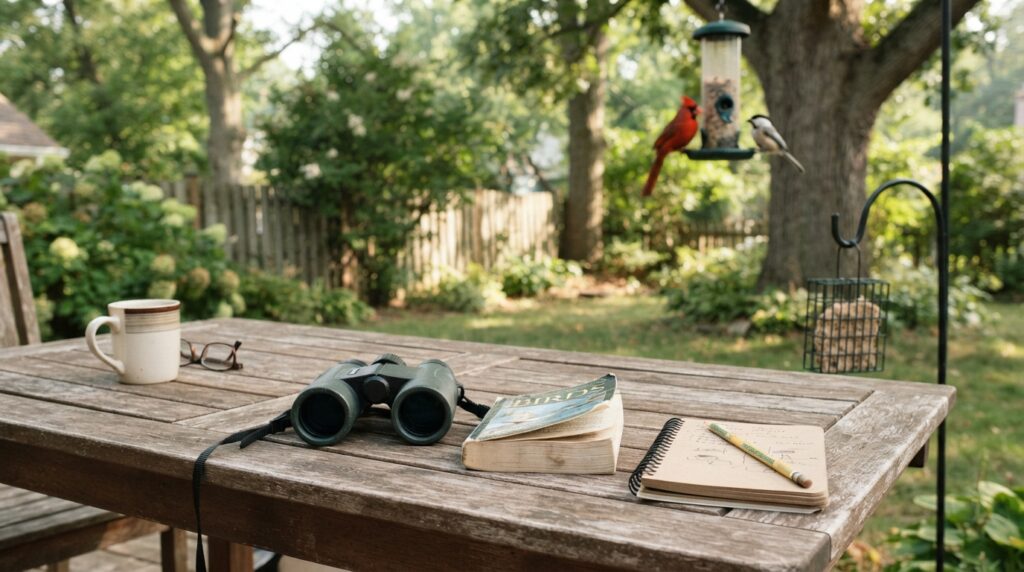
For backyard use, close focus matters more than magnification. Many binoculars will not focus nearer than fifteen or twenty feet, which is useless when the feeder is on the deck rail. Look for close focus around six feet, in an 8×42 or 8×32 configuration.
The honest drawback is the one that matters at gift prices: cheap binoculars frequently have misaligned barrels that cause eye strain and headaches within minutes, which is worse than no binoculars at all. A smaller 8×32 pair from a reputable optics maker beats a large pair from an unknown brand at the same price. If the budget is tight, this is a case for spending it on something else.
A heated bird bath
The gift most likely to change what shows up in someone’s yard, because open water in a freeze is often harder for birds to find than food.
Look for thermostatic control, so it only draws power near freezing, and a basin under two inches deep at the edge with a textured base. Honest drawbacks: it needs an outdoor-rated GFCI outlet within cable reach, which not every yard has; running costs over a long winter are real; and plastic units become brittle and crack after a few hard seasons. Full buying detail.
A different type of feeder
Not another tube. If they have a tube feeder, the useful additions are a hopper or platform (which brings in cardinals, jays and doves that tube perches exclude), an upside-down suet feeder (woodpeckers yes, starlings no), or a nyjer feeder for goldfinches. Comparison here.
For someone who has everything
- A Cornell Lab membership, which includes Living Bird magazine and generally covers Project FeederWatch participation
- A Bird Academy course from the Cornell Lab — identification, bird song, or ornithology proper
- A local Audubon chapter membership, which comes with field trips and people to go with
- A regional field guide for their specific state or region rather than a national one
- A nest box built to specification — 1⅛ inch hole for chickadees, 1½ for bluebirds, no perch, side that opens. Full chart
- Native plants or a gift certificate to a native plant nursery. The most consequential gift on this page and the least obviously festive
Consumables, which never miss
Unglamorous and always used. Black oil sunflower, safflower, suet cakes, peanuts, nyjer — anyone who feeds birds is buying these anyway.
Two things that make it a better gift: a sealed metal storage container to go with it, which most people do not have and which stops seed spoiling and rodents getting in; and buying quantities that will be used within a couple of months rather than a sack that goes stale. Why storage matters.
What not to buy
| Common gift | Problem |
|---|---|
| Decorative birdhouse | Wrong hole size, a perch fitted, no drainage, does not open for cleaning. A perch mainly helps House Sparrows harass the occupants |
| Ornamental bird bath | Usually too deep and too smooth. Small birds will not use water they cannot stand in |
| Novelty feeders | Teapots, boots, cottages. Rarely cleanable, which means they get used once |
| Hummingbird feeders with yellow parts | Yellow attracts wasps. Red-only ports are what you want |
| Cheap “gourmet” seed mixes | Padded with milo, red millet and wheat, which birds discard onto the lawn |
| Wooden seed feeders | Porous, cannot be properly disinfected. Wood is right for nest boxes, not seed feeders |
| Bird feeder cameras, unchecked | Fine gift, but check the subscription terms and whether their wifi reaches the yard first. What to look for |
On Black Friday
Two things worth knowing before the sales.
Seed pricing tracks commodity markets, not retail calendars. Sunflower prices move with harvest and fuel costs, and a November discount is not reliably a better price than March. Buying a year’s supply on a deal is usually a mistake anyway, because seed stales.
Subscription products deserve extra scrutiny in a sale. A discounted camera feeder with a monthly fee attached can cost more over three years than a full-price one without. Check the ongoing terms, not the sticker.
The things genuinely worth buying on discount are the durable ones: binoculars, poles, baffles, heated baths. Those do not expire and the specification does not change.
Common questions
What is the best gift for someone who feeds birds?
Binoculars with good close focus if they do not have a pair, or a heated bird bath if they do. Both change the experience rather than adding to a collection.
Are decorative birdhouses a bad gift?
Usually. Most have the wrong hole size, a perch that helps predators and House Sparrows, no drainage, and no way to open them for cleaning. A plain box built to specification works far better and looks less charming.
How much should I spend on binoculars?
Enough to avoid misaligned barrels, which cause eye strain and make the gift unusable. A smaller pair from a reputable optics maker beats a larger one from an unknown brand. If the budget will not stretch, buy something else.
What if they already have a feeder?
Buy a different type rather than a second of the same. A hopper or platform brings in cardinals and jays that tube perches exclude; an upside-down suet feeder brings woodpeckers without starlings.
Is seed a boring gift?
It is the one that always gets used. Pair it with a sealed metal storage container, which most people do not own and which stops seed spoiling and rodents getting in.
Are Black Friday bird feeder deals worth waiting for?
For durable goods like binoculars, poles and baffles, yes. For seed, not especially — prices track commodity markets rather than retail calendars, and buying a year’s supply means most of it goes stale.
Related guides
Sources: Cornell Lab of Ornithology, All About Birds, Bird Academy and NestWatch, including nest box specifications and the Right Bird, Right House tool; Project FeederWatch, Feeding Birds, on feeder types and materials that can be properly cleaned; National Audubon Society; manufacturer published specifications.
Want a closer look?
A pair of 8x42 binoculars is the single thing that changes backyard birding most. Close focus matters more than magnification when the bird is fifteen feet away.
This link goes to Amazon. If you buy through it we may earn a small commission, at no extra cost to you.