
Affiliate disclosure: some links on this page go to Amazon. If you buy through one we may earn a small commission, at no extra cost to you. Full disclosure.
Most bird seed is alive, so whatever birds drop will sprout. The biggest culprits are cheap mixes padded with millet and milo that birds toss aside. Switch to hulled sunflower hearts or chips, which leave no shells and far less waste, avoid filler mixes, use a tray to catch what falls, and rake up regularly. Pull any unfamiliar weeds before they seed: research has found invasive Palmer amaranth seed in commercial bird seed.
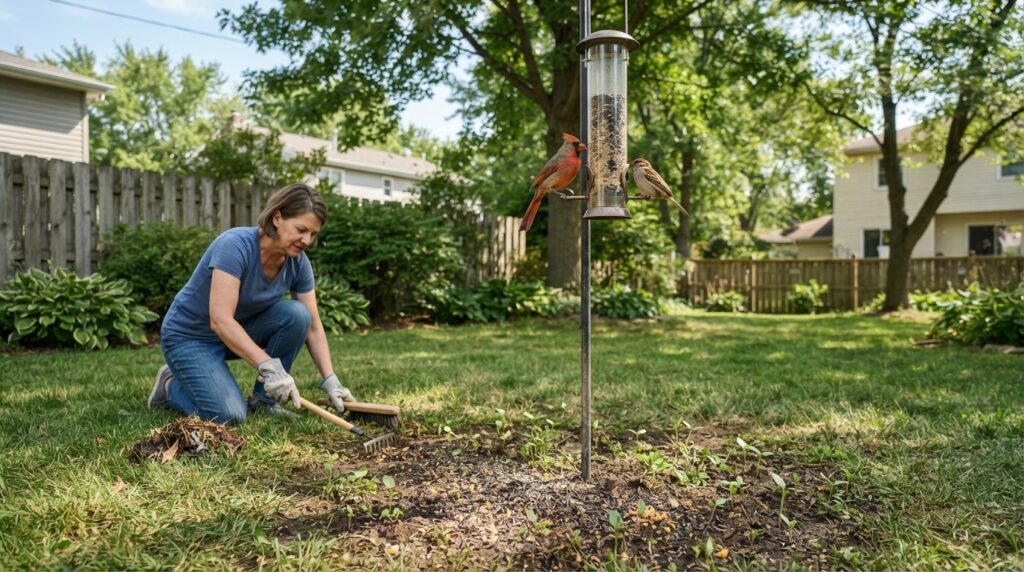
By late spring, the ground under many feeders looks like a tiny farm: tufts of millet grass, a volunteer sunflower or two, sometimes corn. Harmless and a bit charming in small amounts. But it can also spread weeds into beds and lawns, and occasionally something much worse.
The essentials
- Most seed germinates if it lands on soil
- Filler seed (milo, red millet) gets tossed and sprouts most
- Hulled sunflower means less waste and no shells
- Nyjer is heat-treated on import by federal rule
- Sunflower hulls can stop grass growing underneath
- Weed seeds are a common contaminant in mixes
Why seed sprouts under feeders
Colorado State University Extension puts it plainly: most bird seed is still viable, and seed thrown to the ground will germinate. The Georgia Department of Natural Resources notes sunflower, millet and other seeds have germinated both on the ground and in the feeders themselves.
How much hits the ground depends mostly on what you’re feeding. Birds sort through a mix and flick out what they don’t want. Illinois Extension and Project FeederWatch both describe milo as filler that most backyard birds avoid and leave on the ground, and the Georgia DNR notes sorghum deteriorates faster than most seeds once it sits on wet ground.
What usually comes up
| You see | It’s probably |
|---|---|
| Fine grass-like shoots in clumps | Millet |
| Broad-leaved seedlings becoming tall, bristly stalks | Sunflower |
| Corn-like leaves, later a dense seed head at the top | Milo (grain sorghum) |
| Corn seedlings | Whole corn kernels |
| Weeds you don’t recognize, especially pigweed-type plants | Weed seed contaminants in the mix. Pull them (see below) |
The weed seed problem
This is the part most people don’t know about. Bird seed often contains seeds of plants that were growing in the crop field.
What researchers found. A University of Missouri study published in 2020 in Invasive Plant Science and Management tested 98 commercial bird seed mixes bought in 2016 and 2017. Amaranth-family weed seed turned up in 94 of them, and Palmer amaranth, one of the most damaging agricultural weeds in the US, in 27. About 19% of the amaranth seed was readily able to germinate, and five mixes contained seed of herbicide-resistant waterhemp or Palmer amaranth. Other contaminants included common ragweed, kochia, lambsquarters and crabgrass.
The researchers linked proso millet and grain sorghum to more amaranth seed, sunflower to more ragweed, and safflower to more kochia.
This isn’t just academic. In September 2025, Oregon and Washington agriculture officials issued a recall for a bird seed blend found to contain Palmer amaranth. Their advice to anyone who had used it: inspect areas under and near feeders for sprouted weeds, carefully remove the plants, and put them in black plastic bags in the trash, double-bagged and never composted.
If something tall and unfamiliar comes up under your feeder, pull it before it flowers, bag it, and throw it out. If you farm or live next to farmland, take particular care, or ask your county extension office to identify it.
Why nyjer doesn’t sprout
Nyjer (niger seed), the tiny black seed in finch feeders, is imported. Federal rules require niger seed to be heat-treated either on arrival or at an approved facility before shipment. According to USDA regulations, it’s commonly contaminated with the seeds of noxious weeds such as dodder, and treatment is intended to kill them.
Cornell Lab describes nyjer as heat-sterilized to limit its chance of spreading, and Project FeederWatch says it’s heat-treated to prevent sprouting. So nyjer under a finch feeder is rarely the source of your sprouts, though it can still mold and should be cleaned up.
Sunflower hulls and dead grass
The opposite problem is a dead patch under the feeder where nothing grows at all. University of Illinois Extension notes sunflower hulls contain compounds that can prevent turfgrass and other plants from growing, and recommends clearing dropped hulls from under feeders. University of Maryland Extension says the toxins may take years to break down. A thick layer of hulls also molds and smothers grass. Shade and trampling don’t help.
How to stop sprouting
- Switch to hulled sunflower hearts or chips. Penn State Extension notes hulled sunflower leaves no mess, and the Georgia DNR says it eliminates the buildup of hulls. Birds eat nearly all of it rather than sorting through it
- Avoid filler mixes. If a mix has lots of milo, red millet or wheat, most will end up on the ground. How to read a seed label
- Feed single seeds in separate feeders. Sunflower in one, nyjer in another, millet only where ground birds will clean it up. Less sorting means less waste
- Catch it. A tray or catcher under the feeder stops much of the spill. Empty it often
- Rake and sweep regularly. Project FeederWatch recommends raking or sweeping under feeders to keep the area clean
- Put down a hard surface. University of Maryland Extension suggests flagstone or pavers under the feeder, so the bare area becomes a design feature and is easy to sweep
- Move the feeder. Colorado State University Extension advises placing feeders away from flower and vegetable beds so dropped seed doesn’t germinate in them
Hulled sunflower hearts are the single change that cuts mess under a feeder the most. Nearly every seed-eating feeder bird takes them. Honest drawbacks: they cost more per pound than seed in the shell, though you’re not paying for shells; Cornell Lab warns hulled seed spoils quickly and can harbor bacteria once wet, so offer only a day or two’s worth at a time; and they’re easier for squirrels and starlings to eat, too.
What about baking or microwaving seed?
You’ll see this suggested online as a way to stop sprouting. We couldn’t find any extension service, wildlife agency or Cornell guidance that recommends it, and Audubon cautions in its storage advice that overheating can destroy the nutrition and taste of sunflower seed. Changing what you feed does the same job with no risk.
Keep trays and the ground clean
Stopping the sprouts shouldn’t create a hygiene problem instead. Cornell Lab notes moldy or decomposing seed and hulls that build up on feeder trays can make birds sick, and recommends cleaning feeders about every two weeks with no more than one part bleach to nine parts water. Platform feeders and catchers need plenty of drainage holes. The Pennsylvania Game Commission lists moldy seed around feeders as a potential source of aspergillosis. How to clean bird feeders.
Spilled seed also brings in unwanted visitors. Mice and rats, turkeys and deer all follow the spill.
Common questions
Why is bird seed growing under my feeder?
Most bird seed is viable. Seed that birds drop or discard germinates in the soil, especially millet, milo and sunflower.
What bird seed won’t sprout?
Nyjer is heat-treated on import. Hulled sunflower hearts and chips create far less waste, so much less reaches the ground.
Can bird seed spread weeds?
Yes. A University of Missouri study found weed seed in most of 98 commercial mixes, including Palmer amaranth in 27. Pull and bag unfamiliar weeds under feeders.
Why won’t grass grow under my bird feeder?
Sunflower hulls contain compounds that inhibit plant growth, and thick layers smother grass. Rake hulls up or switch to hulled seed.
Should I bake bird seed to stop it sprouting?
No authoritative source recommends it, and overheating can reduce the seed’s nutritional value. Switch to hulled seed instead.
What should I put under a bird feeder?
Pavers or flagstone make it easy to sweep. A seed tray catches much of the spill. Keep the feeder away from garden beds.
Related guides
- Best bird seed: what works and what to avoid
- Wet bird seed: can you still use it?
- Mice and rats under the bird feeder
- Wild turkeys under your bird feeder
Sources: Oseland, E., Bish, M., Spinka, C. and Bradley, K., “Examination of commercially available bird feed for weed seed contaminants,” Invasive Plant Science and Management 13(1), 2020, University of Missouri; Oregon Department of Agriculture and Washington State Department of Agriculture, birdseed recall, September 2025; Code of Federal Regulations, 7 CFR 360.400, niger seed; Cornell Lab of Ornithology, All About Birds, “Types of bird seed” and “How to clean your bird feeder”; Project FeederWatch, food types and feeding guidance; Colorado State University Extension; University of Illinois Extension; University of Maryland Extension; Penn State Extension; Georgia Department of Natural Resources, Wildlife Resources Division; National Audubon Society; Pennsylvania Game Commission, Aspergillosis.
Cutting down on spilled seed?
Hulled sunflower hearts leave no shells and far less waste on the ground. They spoil faster than seed in the shell, so put out only what gets eaten in a day or two.
This link goes to Amazon. If you buy through it we may earn a small commission, at no extra cost to you.